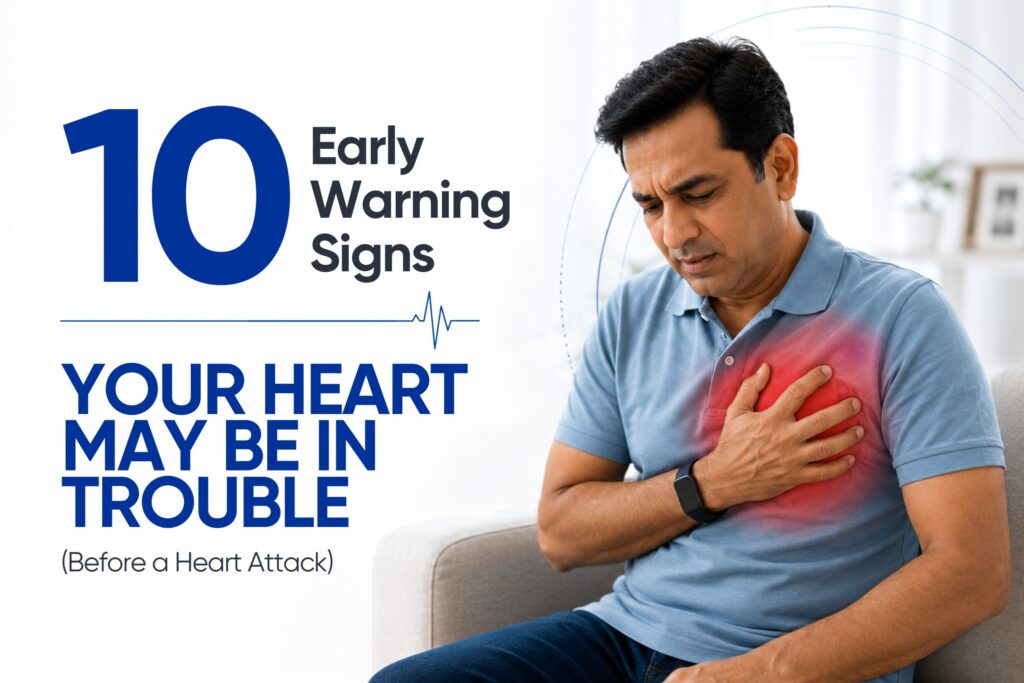
The human heart is incredibly resilient, but it rarely fails without warning. Long before a sudden emergency strikes, your body begins to broadcast quiet, desperate distress signals. According to data published by the American Heart Association, cardiovascular disease remains the leading global cause of death. Yet, many of these tragedies can be averted. Recognising the early signs of heart attack allows you to step in before the damage becomes permanent.
Listen closely to your body. These ten subtle warning signs indicate your heart may be crying out for help.
A looming cardiac event doesn’t always feel like a sudden blow. On the contrary, it often starts as a mild, lingering pressure that often feels like a fullness or squeezing sensation right in the middle of your chest. These kinds of feelings often turn up during physical activity and vanish when you rest. But they usually return quietly.
The constant state of feeling tired is not the only issue. Each one of us has days where we feel exhausted. However, a profound, bone-deep fatigue that leaves you drained after basic chores, as small as making the bed or walking to the car, is a major red flag. When the heart struggles to pump blood effectively, it robs your muscles of oxygen. This scenario often leads to your ordinary life feeling like an uphill battle.
When out of nowhere, climbing a few short flights of stairs makes you gasp for air, this indicates that your cardiovascular system is malfunctioning. Generally, difficulty breathing must be accompanied by a feeling of discomfort in the chest area, but sometimes it might happen even in a calm state.
Heart pain has a habit of travelling. You might mistake a dull ache in your jaw, neck, back, or throat for a strained muscle. This discomfort often radiates down one or both arms, serves as a quiet warning, and should never be brushed aside.
Cold sweating, or sweating profusely in a cool environment, is one of the clearest symptoms of physical distress. Narrowing of blood vessels makes the heart work much harder than it normally would, and thus the body sweats heavily in order to cope with the extra effort or exertion.
True heart distress can easily mimic a stomach bug or a bad case of acid reflux. People frequently dismiss early cardiac issues because they feel like simple nausea, mild stomach burning, or vomiting.
If the room spins when you stand, or if you feel suddenly faint without a clear reason, your brain may not be receiving enough blood flow. This lack of oxygen-rich circulation is a direct indicator of compromised cardiac function.
An occasional skipped beat is often harmless. However, a fast, pounding, or very erratic heart rhythm that happens without physical effort could indicate severe heart problems.
When your heart doesn’t pump well, fluid accumulates in your body tissues. Prolonged swelling in your lower limbs, feet, or ankles indicates that your body’s circulatory system is pooling fluid where it should not be.
Many survivors have felt an overwhelming and inexplicable feeling of doom or anxiety just before the attack. The cause is that the nervous system starts reacting to the feeling of low oxygen levels.
Take Control of Your Story
You do not have to wait for a crisis to take action. Proactive care is the most powerful tool available. Utilising advanced systems like iLive Connect for consistent heart health monitoring can help you track these subtle shifts before they turn into emergencies.
Don’t gamble with your future; explore how iLive Connect can safeguard your life today.