A heart check-up can tell you how someone is doing at that particular moment. But what happens once they leave the clinic?
For families looking after an ageing parent or someone recovering after a cardiac procedure, that question can be difficult to answer. A person may seem perfectly fine during a conversation and experience a change in their health later in the day. Unless someone is there to notice it, there may be no immediate way of knowing.
Technology is changing this gap in care. Connected medical devices can now track important health information while someone stays at home, allowing medical teams to have a clearer picture of their health between consultations.
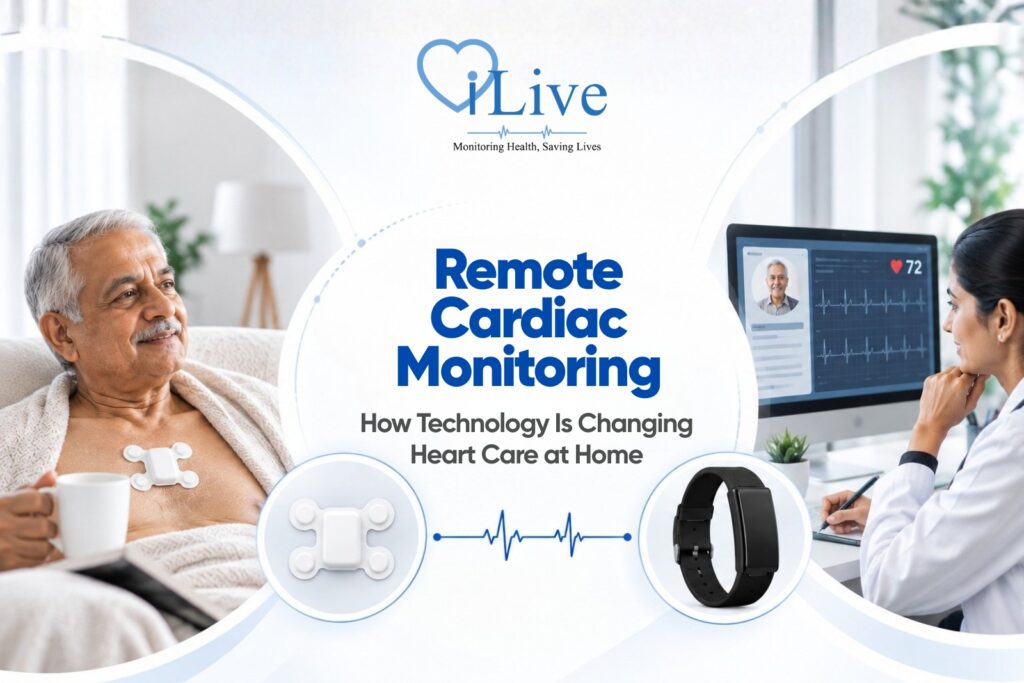
Remote Cardiac Monitoring uses connected medical devices to collect information about the heart and other vital signs outside a hospital setting.
Depending on the system being used, this can include ECG trends, heart rate, blood pressure variations and oxygen saturation. Instead of relying only on occasional readings, doctors can have access to health information collected over a longer period.
This matters because the heart does not follow a doctor’s appointment schedule. Changes can happen at any time, including when someone is resting at home.
There is a difference between checking a vital sign and having someone keep an eye on it.
A person can measure their blood pressure in the morning and find that it is within their usual range. That single reading, however, cannot tell a doctor what happened later that afternoon or during the night.
Continuous heart health monitoring can provide a broader view. Changes can be identified over time rather than being judged from one isolated reading.
For older adults, people recovering after cardiac procedures or those who require closer observation, this can add another layer of support without making every health concern a reason for a hospital visit.
This is where the role of monitoring becomes important.
A biosensor can collect information, but the numbers themselves do not explain what is happening. Someone needs to review the information, recognise when a change may matter and decide whether it needs attention.
This is the model followed by iLive Connect, where connected biosensors and AI-enabled monitoring work alongside a 24×7 clinical team. Medical professionals receive alerts and have access to vital-status information, allowing them to assess changes rather than leaving the person or their family to interpret every reading themselves.
The distinction is important. Remote monitoring is not simply about having a device at home. It is about keeping a line of communication open between the person at home and the professionals watching their health.
A connected monitoring system can collect vital information through biosensors worn by the individual. That information can then be transmitted to a clinical monitoring team.
With iLive Connect, alerts generated through the monitoring system reach a 24×7 clinical team, where medical professionals can review the available information and determine whether further attention is needed.
In some cases, the right response may simply be continued observation. In others, the team may contact the family, arrange a consultation or recommend further medical care.
This makes Heart care at home less about asking someone to keep checking their own readings and more about keeping professional oversight connected to everyday life.
This is an important question, but it also needs a careful answer.
Remote monitoring cannot guarantee that a heart attack will be predicted or prevented. It also does not replace emergency medical care.
However, monitoring vital signs and cardiac trends continuously may help identify changes that deserve medical attention. The American Heart Association lists symptoms such as chest discomfort, shortness of breath, pain or discomfort in the arms, back, neck, jaw or stomach, nausea and lightheadedness among the possible warning signs of a heart attack. Some people may also experience a rapid or irregular heartbeat.
If these symptoms appear, emergency care should be sought immediately. A monitoring system should never be used as a reason to wait.
For many families, the hardest part is not knowing whether their parent is actually okay.
A phone call can help, but it has limitations.
“I’m fine” may mean that everything is genuinely fine. It may also mean that an older parent does not want their children to worry, has not noticed a change themselves or simply does not know how to describe what they are feeling.
Continuous monitoring does not replace that call. It adds another layer of information to it.
For families who cannot be physically present every day, having a clinical team connected to their loved one’s health information can offer a different kind of reassurance. It means someone is keeping an eye on the readings even when family members cannot.
AI has an important role in making continuous monitoring practical. With health information coming in over time, technology can help identify patterns and flag changes that may otherwise be difficult to notice.
But healthcare cannot be reduced to an algorithm.
AI-enabled monitoring works alongside a 24×7 clinical team, like at iLive Connect. The technology can flag a change, while medical professionals review the alert and the available vital-status information to understand whether it needs attention.
That combination matters because remote care should not leave people alone with a stream of numbers. There should be someone who can make sense of those numbers when it counts.
The World Health Organization reports that cardiovascular diseases caused an estimated 19.8 million deaths globally in 2022 and highlights the importance of early detection and management.
Technology cannot eliminate that risk. What it can do is make health information available more consistently, particularly for people who need closer observation outside a hospital.
The real shift is therefore not about putting a sensor on someone’s wrist and calling it remote care. It is about creating a connection between the person at home and the medical professionals responsible for keeping an eye on their health.
For someone living with their parents, being able to check in personally will always matter. For those living miles away, technology can provide an additional link when they cannot be there themselves.
iLive Connect brings together connected biosensors, AI-enabled health monitoring and 24×7 clinical oversight, allowing medical professionals to stay connected to vital-status information while a person remains at home.
Remote monitoring is not about replacing doctors or hospitals. It is about making sure that the period between consultations does not become a blind spot in someone’s care.