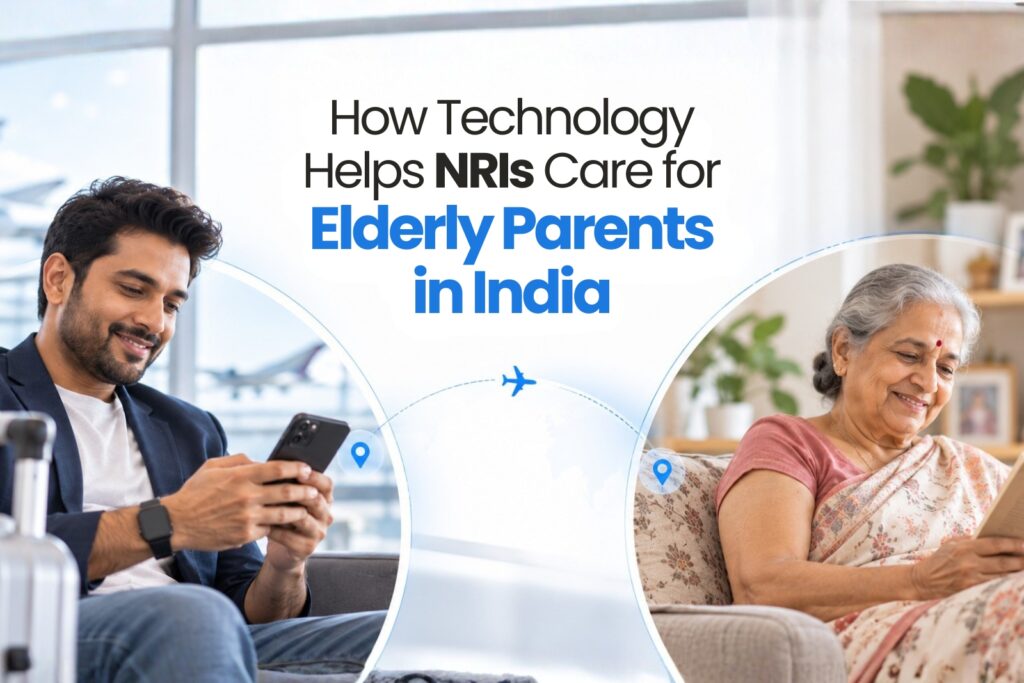
When your parents live in India and you live thousands of miles away, a lot of your day can revolve around small things. Did Dad take his medicines? Has Mum been feeling better? Why did she sound so tired on the phone yesterday?
You ask these questions whenever you get the chance. Your parents, meanwhile, carry on with their day. They may not mention a spell of dizziness or a few nights of poor sleep because it does not seem serious enough to worry you about. Sometimes, they simply do not want their children living abroad to feel helpless.
This is a familiar situation for many NRIs. Staying involved in your parents’ lives is one thing. Knowing how they are doing when you cannot be there is another. Technology is making it easier to keep track of certain aspects of their health, even when a visit home is months away.
Most calls home follow a familiar routine. You ask your parents how they are doing, they tell you everything is fine, and the conversation moves on to work, family or what they had for dinner. You might not find out until your next visit that your father has been feeling tired lately or your mother has been putting off a doctor’s appointment.
It is not always that parents want to keep things from their children. Sometimes, they genuinely do not think a problem is serious enough to mention. Others would rather manage things themselves than have their children worrying from another country. For the son or daughter on the other end of the call, there is often no easy way to know what has been left unsaid.
The need for support is likely to grow as India’s population ages. The United Nations Population Fund (UNFPA), in its India Ageing Report 2023, projects that nearly 21% of India’s population, or around 346 million people, will be aged 60 and above by 2050. For NRIs whose parents are growing older back home, finding practical ways to stay involved in their healthcare is becoming an important consideration.
Regular conversations will always matter, but Elderly parents health monitoring can offer another source of information, particularly when a change in health may not come up during a phone call.
Technology can help families stay involved in their parents’ daily lives, even when they live in different time zones. Video calls make it easier to see and speak to each other regularly, while shared calendars can help everyone keep track of medical appointments, tests and medication schedules.
Digital health records can also make important medical information easier to access when a parent visits a doctor. With their consent, family members living abroad may be able to help organise reports, keep track of prescriptions and prepare questions for upcoming appointments.
Health monitoring tools offer another option. Depending on the device, they can record information such as heart activity, pulse or glucose levels over time. This can give families and healthcare professionals a clearer picture of certain health trends than an occasional update over the phone.
Each tool serves a different purpose. The most useful approach is to choose technology that addresses a parent’s actual needs and is simple enough for them to use comfortably.
When you live overseas, you cannot drop by to check whether your father is feeling alright or accompany your mother to a routine appointment whenever she needs one. Much of what you know about their health comes from what they tell you. Connected health technology offers another way to stay informed.
Depending on their health needs, connected monitoring devices can help track different parameters at home. These include:
These FDA- and CE-approved devices serve different monitoring needs, allowing families to explore options suited to their parents’ health requirements.
For someone who needs regular observation, 24/7 health monitoring for the elderly can provide a more consistent picture of selected health readings than occasional checks alone. If the system detects an unusual pattern, it may flag it for review.
A wearable health monitor for elderly people can collect readings while they go about their usual activities. However, the device itself is only part of the picture. A tracker that displays numbers leaves families to work out what they mean. A service with clinical oversight adds another layer of support, particularly when the family lives thousands of miles away.
Having access to health data is useful only when families know how to handle it. A few simple practices can help NRIs make better use of digital health tools without turning every reading into a cause for concern.
The goal is to make health information easier to access and understand, not to expect family members to interpret every reading themselves.
Imagine getting a call from your mother saying she feels a little weak. You want to help, but you are in another country. You cannot check her vital signs yourself, and asking her to describe how she feels may not give you the full picture.
This is where having access to ongoing health information, along with medical oversight, can be useful.
iLive Connect offers three monitoring options through its cardiac monitoring patch, connected wristband and Continuous Glucose Monitoring (CGM) device. These FDA- and CE-approved devices serve different purposes.
The cardiac monitoring patch tracks selected cardiac parameters, while the wristband monitors pulse and other supported health readings. CGM provides information about glucose levels over time, making it particularly relevant for parents managing diabetes.
iLive Connect’s AI-enabled system flags unusual patterns for review by doctors at its 24×7 Clinical Command Centre. The clinical team reviews the available information and determines the appropriate next steps.
For an NRI, the value lies in having more than a device displaying readings. The monitoring process includes a clinical team that reviews alerts, so family members are not left trying to decide what every change means on their own. For parents using CGM, glucose trends can also provide useful information for review by the care team and, where needed, the treating doctor.
This does not mean every alert indicates a serious problem, or that remote health monitoring can replace an in-person consultation. It gives families another source of health information when they cannot check on their parents themselves.
Families exploring remote monitoring can visit iLive Connect to learn more about its doctor-led approach and how the service works.
Many NRIs know the routine well. You call before work or once you get home, ask whether your parents have eaten and taken their medicines, and try to fit a proper conversation into whatever time you have. When they say everything is fine, you want to believe them. Yet you may still wonder whether they are telling you the whole story.
Remote monitoring can take some of the pressure off these conversations. Instead of making every call about health checks, families can use the time to catch up on ordinary things, while a connected monitoring service provides additional information about selected health readings.
This can be useful when parents need regular observation but are otherwise comfortable living at home. They can continue with their routines while their children have another way to stay informed. It may also help families recognise when they need to follow up with a parent or seek medical advice about a concern.
That does not mean technology removes the need to call, visit or arrange local help. A monitoring device cannot accompany a parent to an appointment or notice every change in their mood. Continuous AI Health monitoring works best alongside these everyday forms of care, rather than in place of them.
Parents should also be part of the decision. Talk to them about what the device records, how the information is used and who reviews alerts. The aim is to help them feel supported, not to make them feel watched.
Living abroad means missing some of the ordinary moments that make caring for parents easier. You cannot always see when they are having a difficult day, and you may hear about a health concern only after it has passed.
Technology cannot remove that distance, but it can help families stay informed. Access to health readings, alerts when unusual patterns are detected and clinical review can give NRIs more information when deciding whether their parents need further attention.
Through its doctor-led AI health monitoring service, iLive Connect helps families keep track of selected aspects of their parents’ health, including glucose trends for those living with diabetes. Having this information, along with clinical oversight, can make it easier to follow up on concerns even when family members are thousands of miles away.
A call home will always matter. So will a visit, a familiar voice and knowing someone nearby can help when needed. Having better access to health information simply gives families one more way to look after their parents, even when home is in another country.