We all know the classic movie scene. A character gasps, clutches their chest, and collapses. It makes us think a heart attack is always loud, painful, and impossible to ignore.
But what happens when it makes no sound at all?
A silent heart attack strikes without that crushing chest pain. Since the warning signs are so quiet, thousands of people go through them every year without realising their life is on the line. Learning to spot these hidden signals and understanding how modern technology keeps watch is the first real step toward protecting yourself and your family.
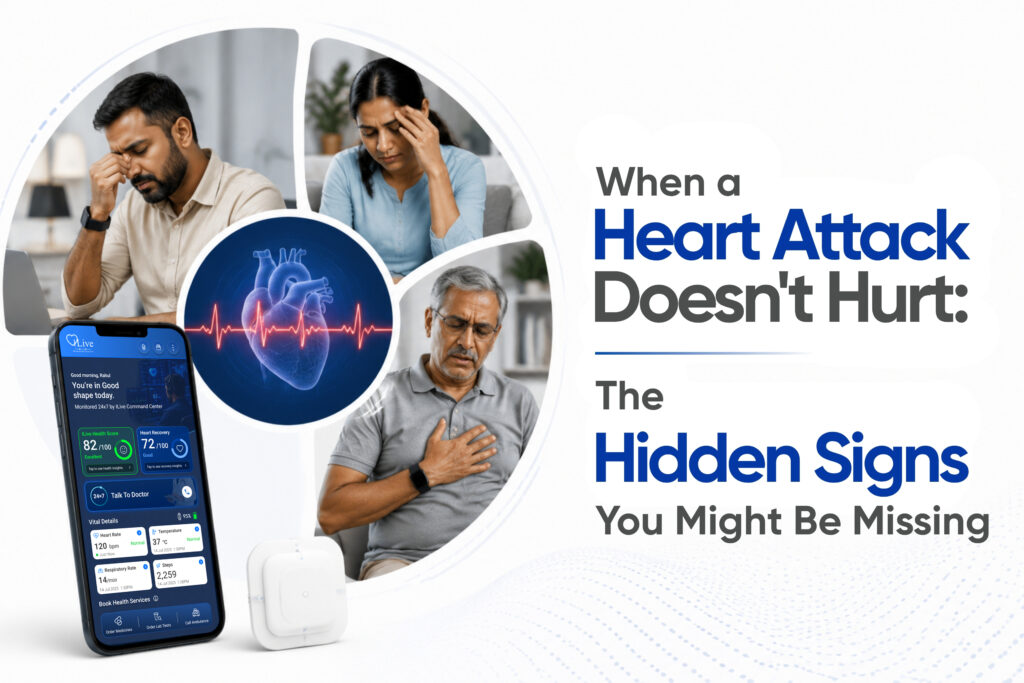
A silent heart attack, or silent myocardial infarction (SMI), is a cardiac event where blood flow to the heart is blocked without causing typical, intense pain or obvious symptoms. This event, which causes damage while often going unnoticed, may manifest through subtle signs like mild chest pressure, fatigue, or shortness of breath.
A silent heart attack won’t announce itself with dramatic chest pain, so you have to tune into smaller clues from your body. These subtle changes and silent heart attack symptoms are incredibly easy to overlook because they just don’t feel like a medical emergency.
Watch out for these specific signs:
A mild, uncomfortable squeezing or heavy feeling in the centre of your chest that comes and goes over a few minutes.
A dull ache or tightness in your upper body that feels exactly like a strained muscle but stays there even when you rest.
Finding yourself wheezing or gasping for air during a light, normal activity you usually do easily, or even while sitting on the couch.
An unexpected wave of deep exhaustion that hits out of nowhere, leaving you drained even if you slept well the night before.
Suddenly breaking out into a clammy sweat without moving around, sometimes alongside a lightheaded or faint feeling.
Without sudden, sharp pain, figuring out what’s wrong gets confusing. These silent heart attack symptoms mimic everyday fatigue or a passing viral infection. People frequently ignore mild chest pressure or fullness as simple acid reflux, indigestion, or just a heavy meal.
When you ignore these symptoms and reach for an antacid instead of a doctor, the real issue goes untreated. The heart muscle keeps losing oxygen, which causes quiet, permanent damage while you simply go about your afternoon.
It is terrifying that we can’t treat a problem we can’t feel. A major study by the American Heart Association revealed that silent heart attacks actually make up nearly half of all heart attacks, and they vastly spike your long-term risk of heart failure.
Some people face a much higher risk of these hidden events. For instance, living with diabetes means high blood sugar can damage the nerves carrying pain signals to your brain. Your body goes through a cardiac event, but the physical pain message gets cut off before you feel it. High blood pressure and cholesterol also quietly wear down your blood vessels, building up risk without changing how you feel day-to-day.
An annual checkup or a quick blood pressure reading at the clinic is great for general health, but it only captures a single moment in time. A doctor can’t predict a sudden arterial blockage that happens on a random Tuesday night at home.
Catching a silent event requires continuous protection. If you wait around for severe symptoms to show up, you miss the critical early window where treatment works best. True safety comes from keeping a steady, daily eye on how your heart behaves.
You don’t have to rely on guesswork or wait for an emergency to strike. Modern preventive heart health monitoring technology lets you monitor vitals from your own home, giving you clinical-grade supervision during daily life.
FDA- CE approved Biosensor devices from platforms like iLive Connect can help in tracking live trends in your heart rhythm, oxygen levels, and blood pressure. The system can be used to monitor your body around the clock instead of waiting for you to feel pain, catching dangerous cardiovascular spikes or irregular patterns that are impossible to notice on your own.
The real difference comes from the human care attached to the tech. When a device catches an anomaly, a team of medical professionals at a 24/7 clinical command centre reviews the data right away. If the numbers show a real issue, they don’t just drop a notification on your phone. They call you and your loved ones directly to coordinate immediate medical care, protecting that vital window of time where every single second counts.
Living with the fear of the unknown takes a heavy toll, especially with a family history of heart issues or chronic health conditions. You don’t have to carry that worry by yourself. Choosing continuous heart health monitoring means living a life where you are actively looked after, leaving you free to focus on the moments that matter with your family. If you want to see how constant, expert supervision can protect your home, look into how iLive Connect pairs smart tech with a live medical team to keep you safe every day.