A routine health check-up gives you a picture of your health at one particular point in time. But what happens in the weeks or months before the next appointment?
Blood pressure may fluctuate. Heart rate, oxygen levels or breathing patterns may change. Some of these changes may be temporary, while others may need closer attention. Yet if they happen between scheduled check-ups, they may not be captured or noticed until the next consultation.
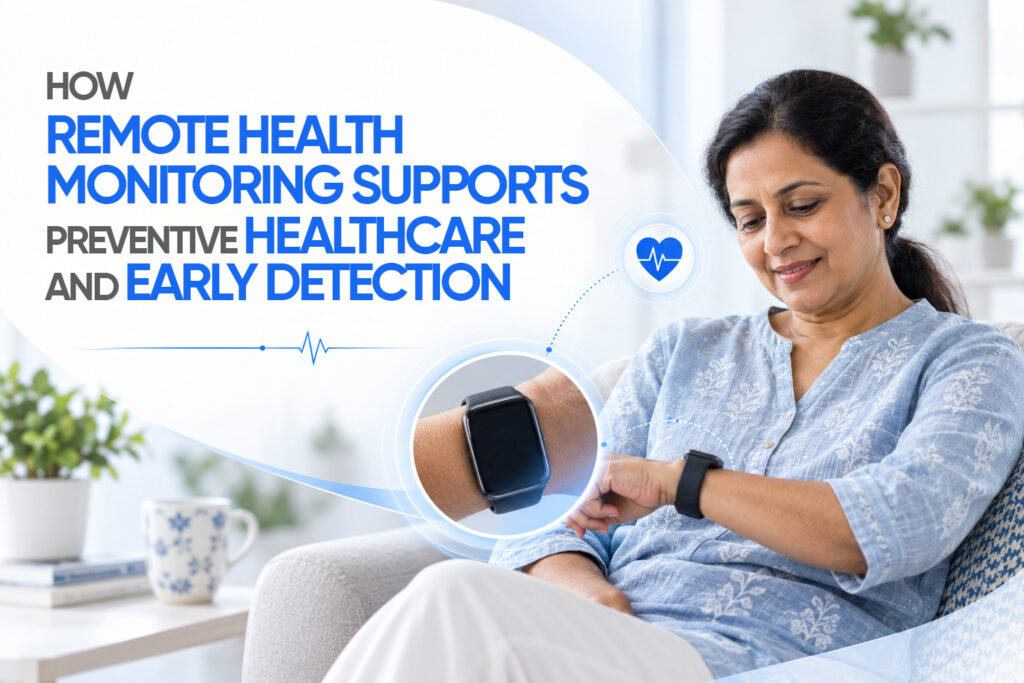
This gap can be particularly important for older adults who may need closer observation at home. Remote Health Monitoring can help bridge it by tracking relevant health information during everyday life and making it available for professional review. Instead of relying only on periodic health checks, families and healthcare professionals can have a clearer view of changes that occur between appointments.
Remote health monitoring uses connected medical devices to collect health information while a person is at home or away from a healthcare facility.
Depending on the technology, this may include heart rate, blood pressure variations, oxygen saturation, breathing and ECG trends. When this information is collected continuously, healthcare professionals can observe readings over time rather than relying only on occasional measurements.
The purpose is not to turn every health reading into an alert. Health measurements naturally change throughout the day. What matters is whether a reading or pattern appears unusual and whether it needs clinical attention.
Preventive healthcare is usually associated with regular check-ups, screening and healthy lifestyle choices. Remote monitoring can complement these measures by providing information between scheduled appointments.
For example, a single blood pressure reading may offer limited insight. Repeated readings over time can provide a broader picture that a healthcare professional can consider alongside other information.
This does not mean remote monitoring can diagnose a condition on its own. Instead, it can help bring changes to the attention of healthcare professionals so they can decide whether further assessment is appropriate.
For families caring for older parents, that additional information can be particularly useful when they cannot be present every day.
Early attention often depends on noticing that something has changed.
Continuous monitoring can make it easier to identify unusual variations in certain health parameters that may otherwise go unnoticed between appointments. Depending on the system, these could include changes in heart rate, oxygen saturation, breathing or ECG trends.
However, an unusual reading does not automatically mean that something is wrong. It needs to be considered in context and reviewed appropriately.
The benefit of continuous monitoring, therefore, is not simply the volume of data it produces. It is having relevant information available when a healthcare professional needs to assess a change.
Older adults may benefit from closer health observation, particularly when they are managing ongoing health concerns or living independently.
The World Health Organization estimates that by 2030, one in six people worldwide will be aged 60 or older. WHO also highlights the importance of person-centred and integrated care that supports older people as they age.
For families, this makes 24/7 health monitoring for elderly care an increasingly relevant consideration. Continuous monitoring can provide another layer of awareness without requiring an older adult to regularly travel to a healthcare facility simply to have certain health parameters observed.
It can also help families stay connected to their loved one’s health when distance makes regular visits difficult.
Living alone does not necessarily mean an older person cannot manage independently. In fact, many people value the freedom of staying in their own home.
The concern for families is often what happens if there is a significant change in health when nobody is nearby.
A remote health monitoring solution for the elderly can provide ongoing access to health information for professional review. Instead of placing the responsibility entirely on an older person or family member to keep checking readings, monitoring can form part of a wider clinical support system.
That distinction can make a difference for families who live in another city or country and cannot respond immediately to every concern.
AI can process large amounts of health data and identify patterns or changes that may warrant attention. This can be particularly useful when information is being collected continuously.
But an AI alert is not the same as a medical assessment. Once a potential concern is flagged, the information needs to be reviewed in context by a healthcare professional who can determine whether it requires further attention.
This is where the combination of technology and clinical oversight becomes important. At iLive Connect, AI-enabled monitoring works alongside a 24/7 Clinical Command Centre staffed by healthcare professionals. When an alert is generated, the clinical team can review the available health information, assess the situation and, where necessary, contact the family or help coordinate the next step.
The value, therefore, is not simply in generating an alert. It is in having a clinical team available to review that alert and respond when it requires attention.
Distance can make everyday health monitoring difficult. Regular visits remain important, but they cannot provide continuous information about someone’s health.
Remote monitoring can help close that gap by making relevant health information available for professional review.
With iLive Connect, the clinical team can monitor health alerts and status through its 24/7 Clinical Command Centre. If something requires attention, the team can contact the family and help determine the next step.
This can offer reassurance without asking older adults to give up the independence they value.
The role of remote monitoring is not to replace doctors or routine healthcare. It is to make useful health information available more consistently.
iLive Connect brings together three important elements: continuous health monitoring through connected medical devices, AI-enabled analysis of health data and 24/7 clinical oversight. Its Clinical Command Centre gives healthcare professionals a role in reviewing alerts and health status rather than leaving families to interpret health data on their own.
This creates a more connected approach to monitoring, where technology helps collect and analyse information while healthcare professionals remain involved in deciding when attention may be needed.
Preventive healthcare involves paying attention to health before a concern becomes difficult to manage. Regular consultations remain essential, but they only provide a snapshot of what is happening at a particular time.
Remote monitoring can add another layer by tracking relevant health information during everyday life and bringing unusual changes to professional attention.
For older adults, this can support greater independence at home while giving families added reassurance. iLive Connect combines continuous health monitoring, AI-enabled analysis and a 24/7 clinical team that can review alerts and respond when attention is needed.
The result is a model of care where technology helps keep track of health, while clinical professionals remain part of the response.