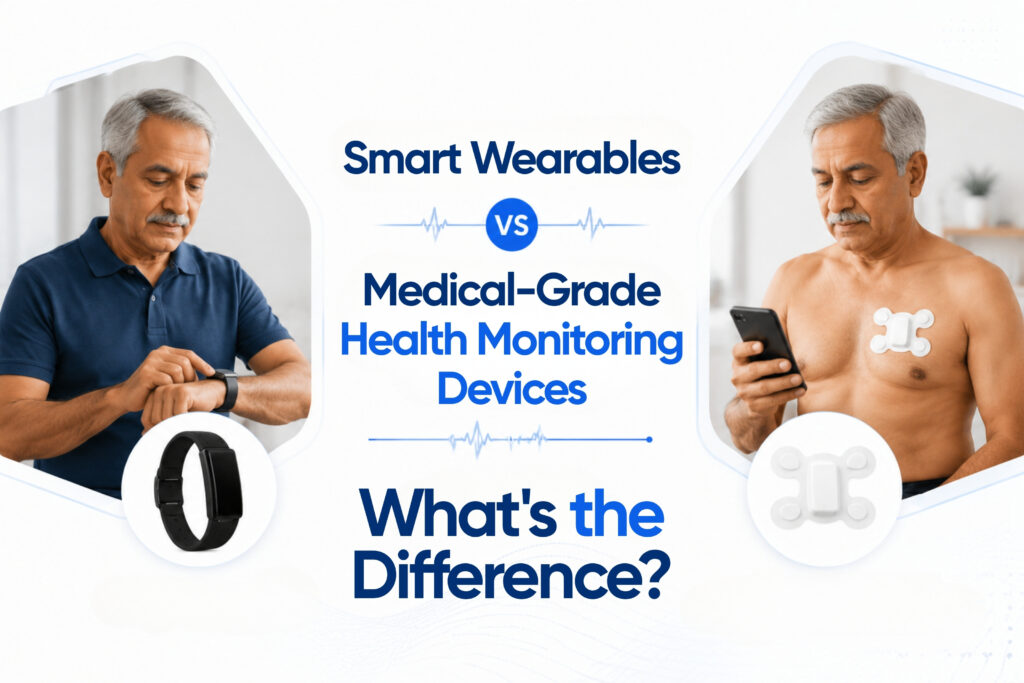
A smartwatch can tell you that your heart is beating faster. It can remind you to stand, count your steps and even flag an irregular rhythm.
But when health is fragile, knowing a number is not always enough.
The real question is: Who is watching that number, what does it mean, and what happens when something changes?
That is where the difference between smart wearables and medical-grade monitoring becomes important.
Tracking one’s health has become easier and more personal than ever, thanks to smart devices such as smartwatches and fitness trackers. Their innovative technology allows people to monitor their vital signs, including heart rate, sleep patterns, physical activity, blood oxygen levels, and even electrocardiogram readings, depending on the specific device.
The findings of the Apple Heart Study, which included more than 400,000 participants, showed that notifications about irregular heart rhythm can potentially help detect people with atrial fibrillation. Thus, participants who received such notifications were subsequently examined by medical professionals and were offered continuous ECG monitoring.
However, it is important to keep in mind that while a smart device can detect a signal, it does not provide knowledge about the clinical situation and professional medical oversight.
If someone just wants to know about their daily wellness, a smart device will help. For elderly patients recovering after hospitalisation or those suffering from chronic diseases, the challenges with using a smart device are much greater.
Medical-Grade Health Monitoring Devices work on a clinical basis instead of lifestyle. In other words, their goal is to collect relevant clinical data rather than simply show health information. Such data can include ECG, heart rate, respiration rate, oxygen saturation, temperature, combined with other vital indicators.
The FDA states that medical wearable devices may monitor health parameters on a continuous or intermittent basis outside the usual clinical setting, including home monitoring.
The key benefit is continuity. Five minutes at a doctor’s clinic provide the doctor with only a glimpse of a patient’s condition, whereas continuous monitoring provides information about the events in between. A gradual decrease in oxygen saturation, an abnormal heart rhythm, or a decrease in respiration rate might be found well ahead of the patient feeling sick.
This information can be very crucial.
Technology is much more powerful when combined with clinical judgement.
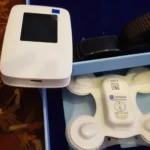
iLive Connect focuses on a biosensor worn on the chest and a wristband which captures real-time information concerning ECG with lead, heart rate, respiratory rate, SpO2, temperature, activity and heart rate variability.
This is the crucial difference between Doctor Suggested Health Monitoring Devices and a conventional wellness gadget.
The goal of the device is not only to alert patients about their heart rates and issues they might have. It establishes a connection between measuring data, interpreting it, and creating actions based on that. Families who take care of older relatives who are living in a different city or country can receive something a regular smart device cannot offer.
In today’s world of medicine, smart wearables play an essential role. They raise awareness of wellness, promote better habits and may prompt contact with healthcare providers when issues arise.
But when constant medical supervision is vital, only medical-grade monitoring can deliver the necessary level of protection.
This is because healthcare is more than just data collection.
It’s about noticing changes in the data, understanding their meaning and knowing when to do something about it.
With the iLive Connect solution, health monitoring evolves beyond a screen and enters a state of continuous doctor-led healthcare supervision. Check iLive Connect for you to understand how to be sure you have easy access to necessary health information at any time, anywhere.